
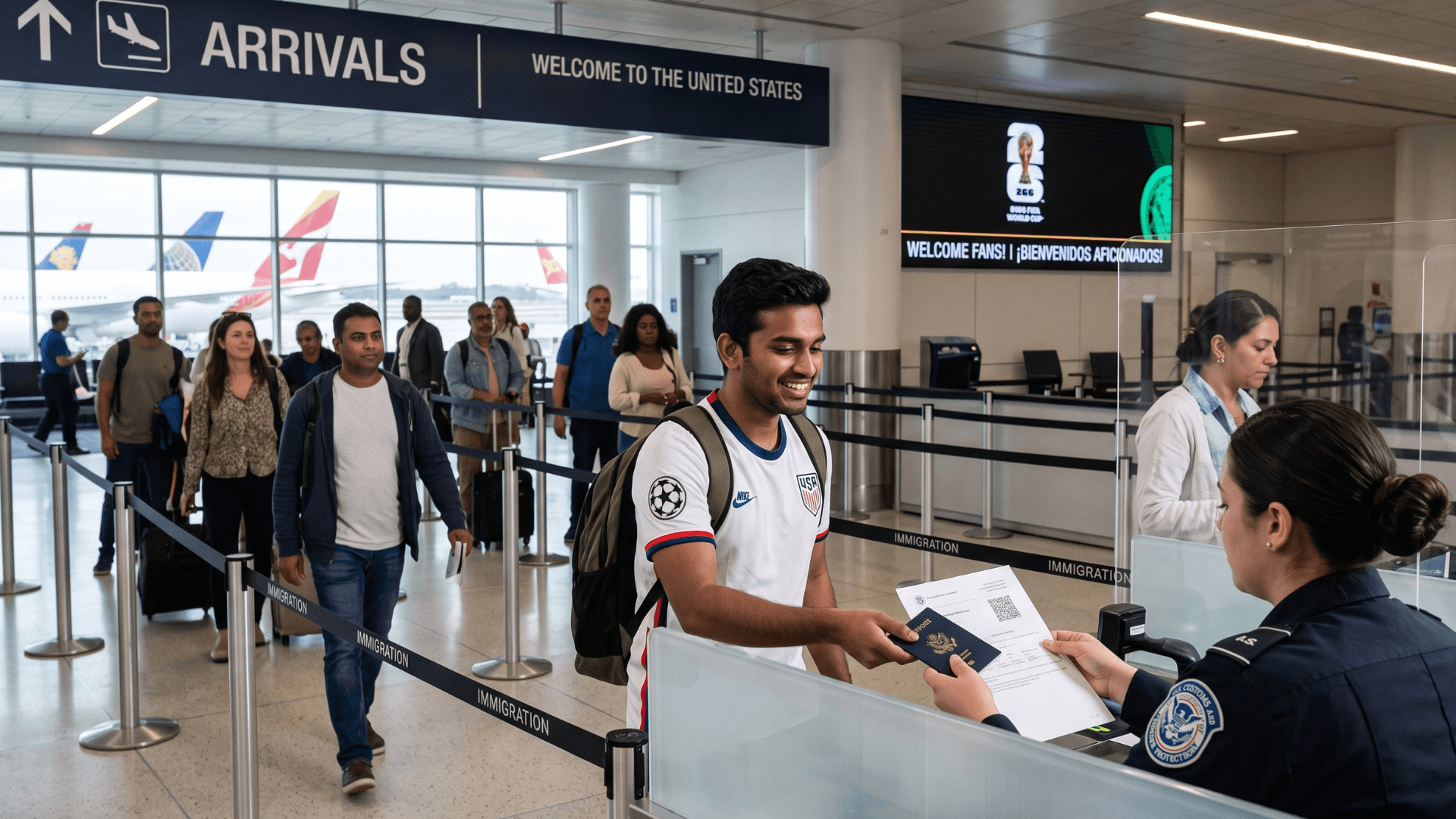
The 2026 FIFA World Cup is currently underway, bringing together players, coaches, media personnel, and millions of fans from around the world. As the United States serves as one of the host countries, the tournament is showcasing not only the excitement of international soccer but also the significant role that U.S. immigration policy plays in facilitating a global event of this magnitude.
For many international visitors, attending a World Cup match requires obtaining a visa to enter the United States. While countless fans successfully navigate the visa process, others face challenges due to lengthy processing times, limited appointment availability, or additional security screening requirements. As a result, immigration policies are becoming an important part of the conversation surrounding the tournament.
The World Cup presents a unique challenge for immigration authorities. On one hand, the United States has a legitimate responsibility to maintain border security and enforce its immigration laws. On the other hand, a successful international sporting event depends on the ability of athletes, coaches, referees, journalists, support staff, and fans to travel across borders and participate in the competition.
At present, public discussions continue regarding how immigration policies and international political developments may affect travel to the United States during the tournament. Questions have arisen about the impact of geopolitical tensions, travel restrictions, and visa processing requirements on certain participants and visitors. These discussions highlight the complex relationship between immigration law, national security, and international sports.
From an immigration law perspective, transparency and consistency remain critical. Individuals seeking to attend World Cup matches or participate in tournament-related activities should have a clear understanding of the immigration requirements that apply to them. Likewise, immigration decisions should be made according to established legal standards and procedures. Predictable policies help reduce uncertainty for travelers, teams, sponsors, and event organizers while promoting confidence in the immigration system.
At its core, the FIFA World Cup is about bringing people together through sport. It creates opportunities for cultural exchange and fosters connections among individuals from different backgrounds and nations. As immigration attorneys, we recognize the importance of secure borders and lawful immigration enforcement. At the same time, we hope that immigration policies are applied fairly, consistently, and efficiently so that the World Cup can continue to serve as a celebration of international unity, competition, and cooperation.